
Say Goodbye to Fluorescent Bulbs
If you own or manage a facility with fluorescent luminaires, chances are you’ve heard of the new California fluorescent bulb law. And it isn’t until recently that the lack of stock of fluorescent bulbs is really being felt. The bill — known as California bill AB 2208 — prohibits the sale and distribution of fluorescent lamps, and a total ban was imposed on January 1, 2025. So, how does this impact you? What do you need to know?
The new Rules
On January 1, 2024, the law prohibited a screw or bayonet base type compact fluorescent lamp from being offered for final sale, sold at final sale, or distributed in California as a new manufactured product. Then last year, on January 1, 2025, pin-base type compact fluorescent lamps or linear fluorescent lamps have been prohibited from being offered for final sale, sold at final sale, or distributed in California as a new manufactured product.
Who is Impacted?
All California buildings and facilities currently using fluorescent lamps will need to start thinking about how to replace fixtures with more efficient lighting LED alternatives, prior to the phase out dates. This also effects the residential homeowner who will no longer be able to find fluorescent bulbs at local stores.
What is driving this change?
The California fluorescent bulb ban has an impact on worker safety and the environment. Fluorescent bulbs contain the toxic chemical Mercury, which can pose health and safety risks to people involved with creating and installing them. It is also hard to dispose of safely and can cause mercury pollution in our air and soil.
Additionally, LEDs typically produce the same illumination as fluorescents but use half as much electricity, which will cut California’s lighting energy bills and reduce the environmental impact of its energy consumption. A recent study found that the electricity savings from a complete transition to LED lighting would cut annual carbon dioxide emissions in 2030 by 18 million metric tons, an amount equal to the annual emissions of four million typical passenger cars. On a cumulative basis, a phaseout would cut carbon dioxide emissions by more than 200 million metric tons through 2050.
Does this Affect Other States?
California is the second state to pass a ban on fluorescent lamps, with Vermont being the first. Vermont passed a vote to phase out CFLs in 2023 and four-foot LFLs in 2024. However, California did take it one step further by including lamps up to eight feet in its bill.
At the time of writing the following states have different levels of Bans/Laws governing which fluorescents are used. These include Colorado (2025), Hawaii (2025), Maine (2026), Maryland (2025), Massachusetts (high CRI only), Nevada (high CRI linear 2024), Jew Jersey (high CRI 2023), Oregon (2025), Rhode Island (2025), Washington (high CRI 2023), and Washington D.C.
What Can I do to Prepare for a Fluorescent Bulb Ban
Chances are that fluorescent bulbs will be banned in your state at some point. The best option is to start preparing for it now, and plan to implement LEDs into your facilities. Not only will you be ready once the ban is imposed, but you’ll also see a reduction in your energy costs. But, how exactly do you go about preparing for this ban, especially if you have multiple locations? Follow this checklist:
Start Budgeting
The best way to start preparing for a fluorescent bulb ban is to work it into your budget. If you need to cut costs in other areas to accommodate an LED upgrade, it’s best to start looking into options now.
Survey Your Locations
You’ll need to complete surveys of your existing lighting to determine which locations need to be included in the budget that haven’t been updated recently with LED luminaires.
Talk to a lighting consultant
Having someone that can guide you through the options and code requirements and even survey the site as mentioned above will help make the process smoother for you. Thinking holistically with existing controls infrastructure and luminaire limitations need to be taken into account.
Follow a Strict Timeline
It’s important to set a clear and concise program schedule prior to program kickoff to ensure your facilities are compliant before the phase-out dates or in a manner that has least impact on the existing use and occupants of your building. Sometimes that means that the work is done in phases.
What are the benefits to me?
Mercury-free LED replacements for linear and compact fluorescent lamps (i.e., light bulbs) are widely available and provide the same or better lighting service, longer product life, and much lower total cost.
The modest additional cost of LED lamps is paid back quickly in lower utility bills. For businesses, where most linear fluorescent lamps are used, the payback period for the most common lamps is less than two months. For households it is about a year, well within the products’ useful life.
What are some of the options?
Depending on the type of fluorescent luminaries and the condition of the luminaire one method may make more sense than another.
Option 1: Replacing with LED retrofit lamps (Least Cost)
Pros: cheapest solution to the issue, safer than ballast bypass. Has energy savings compared to old fluorescent lamp.
Cons: LED replacement tube lamps are more expensive than new fixtures over the life of the fixture – fixtures are already old and likely need to be changed out in the future.
Energy used by the existing fixtures is up to 50% more than a newer LED, resulting in no energy/power savings over the life of the fixture compared to new.
Care needs to be taken for ballast compatibility when selecting replacement LED lamps, not all are compatible.
There will be continued ballast maintenance required, as the ballasts are old you will get more and more failed ballasts and maintenance needed.
Quality of some Retrofit lamps is not as good as the original fluorescent or new LED; flicker and output are concerns.
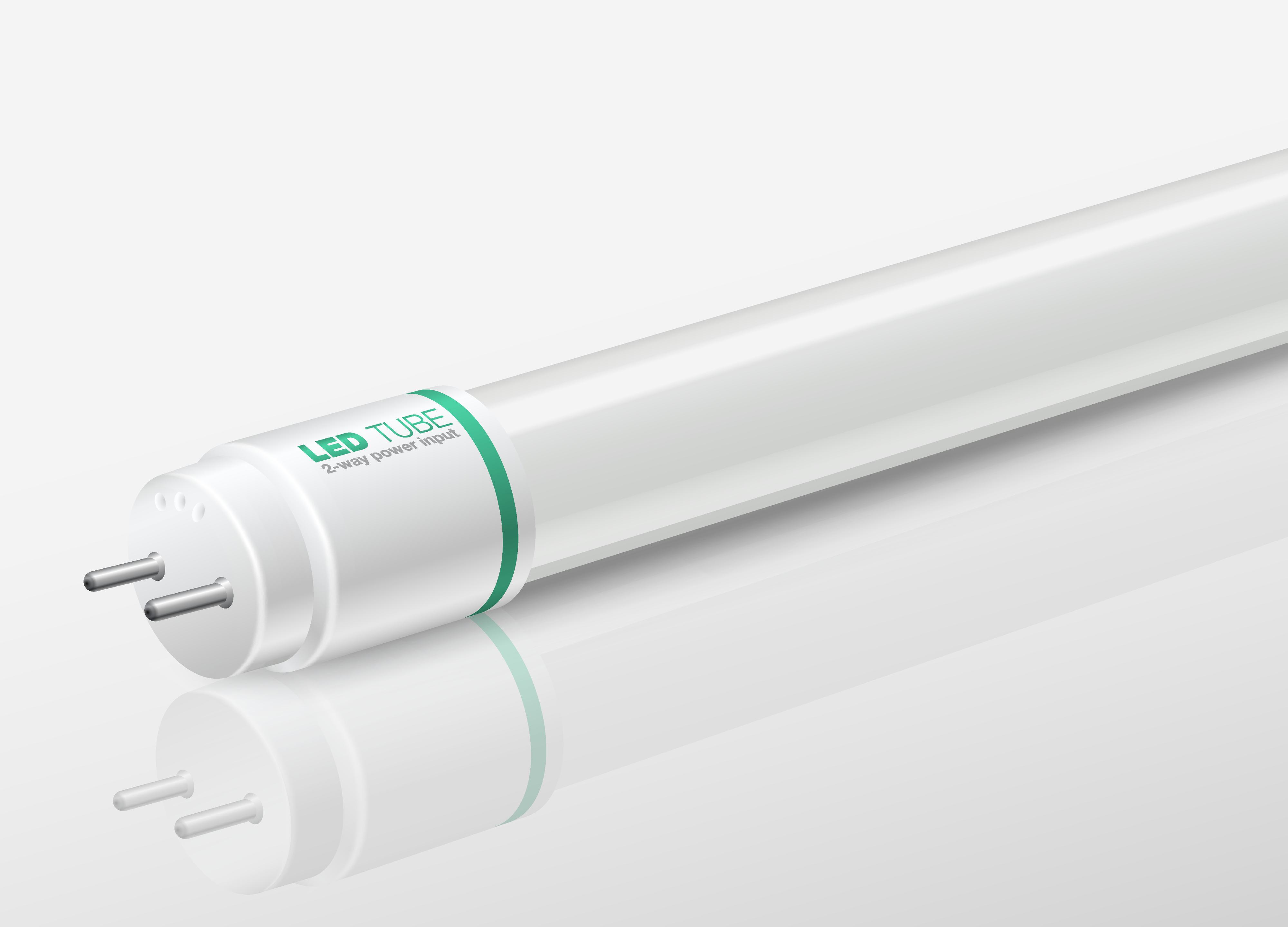
Option 2: LED retrofit kit (Medium Cost)
This is the safest and most robust option for the change to LED from fluorescent – but it not widely available for every fixture. A lot of luminaires and manufacturers are discontinued or out of business from many years ago.
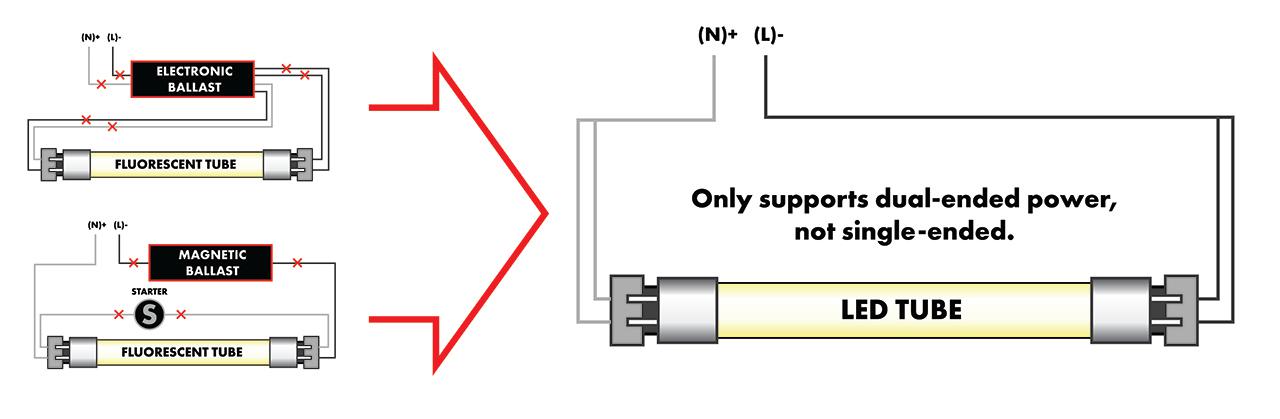
Option 3: Ballast Bypass + LED retrofit lamp (Medium Cost- Mostly labor)
Pros: No ballast maintenance, but as fixtures are typically quite old they still require more maintenance than a new fixture.
Cons: Re-wiring without replacing a ballast or driver. Safety risk, rewiring has led to fires in this type of retrofit, is also voids some UL listings. Modification stickers are required to show that the UL listing is now transferred to the LED tube.
Option 4: New Luminaire (Highest Cost)
Pros: A one for one replacement of lighting ensures you have the latest in energy savings and reliable luminaires that need the least maintenance, saving you in both energy costs and maintenance costs over the life of the fixture.
Cons: Highest cost. Depending on your state or jurisdiction there may be code triggers for some controls also. Older controls may need to be updated to meet these codes for dimming or shut off.
In conclusion, understanding your current systems and finding solutions that work with your budget, timeline and those existing systems ultimately is the next step forward to finding a solution with longevity for the future of the lighting of your facilities and buildings.